How to Actually Feel Good in Your Third Trimester: A Prenatal Chiropractor Shares Her Best Tips
Let me just say it: the third trimester is humbling.
You're growing a whole human. Your body is doing something absolutely incredible. And also? Everything hurts. Your back, your hips, your pelvis, that weird rib thing that nobody warned you about. Sleeping is a contact sport. Getting off the couch requires a strategy. And don't even get me started on trying to put on shoes.
I remember being deep in my third trimester and thinking, is this just... how it is now? Like maybe I was just supposed to white-knuckle my way through the last few months and hope for the best.
Spoiler: you don't have to.
One of the best things I did during both of my pregnancies was build a prenatal care team that actually helped me feel good in my body, not just survive. And a massive part of that team? My chiropractor.
I've been seeing Shea of Tree of Life Chiropractic for years now. She was part of my care team through trying to conceive, IVF, pregnancy, attempting to flip a breech baby (yep, that's a story), birth prep, postpartum recovery, and honestly just... life. She's one of my most trusted resources, and I'm so excited to have her share some of her expertise with you today.
Whether you're in your third trimester right now and Googling "why does my pelvis feel like it's splitting in half" (been there), or you're earlier in your pregnancy and want to get ahead of the discomfort, this one's for you.

Why Chiropractic Care During Pregnancy is a Game Changer
Before we get into Shea's tips, I want to share a little bit about why I'm such a believer in prenatal chiropractic care.
During pregnancy, your body releases a hormone called relaxin (appropriately named, right?) that loosens your ligaments and joints to make room for baby. That's amazing and necessary, but it also means things shift around in ways that can cause real discomfort, especially in your lower back, hips, and pelvis.
Prenatal chiropractic care focuses on keeping your pelvis and spine properly aligned throughout all of these changes. And it's not just about pain relief (although, yes please). Proper pelvic alignment can give your baby more room to grow and get into the best position for birth, which can mean a smoother delivery, too.
Shea and her team at Tree of Life are certified in the Webster Technique, which is specifically designed to support pelvic balance during pregnancy. I wrote about this more in my favorite pregnancy resources post if you want to dig deeper!
Now, let's get to the good stuff. I asked Shea some of the questions I hear most from my clients (and the ones I had myself!), and her answers are so helpful.
1. When should I start seeing a prenatal chiropractor?
A lot of my maternity clients tell me they wish they'd started chiropractic care earlier. So let's clear this up right away.
Shea's take:
Chiropractic isn't just about responding to discomfort. It's about creating an environment where your body can adapt, regulate, and function at its highest level. When we begin care before conception, we're supporting the nervous system, reducing stress patterns, and helping the body move out of "survival mode" and into a more connected, regulated state. That foundation can make a real difference in how someone experiences pregnancy overall.
That said, it's never too late to start. Whether you're trying to conceive, newly pregnant, or well into your third trimester, your body is always capable of shifting and adapting with the right support.
If you're thinking about starting a family, this is one of those things I'd consider part of preparation, not just something to reach for when something feels off.
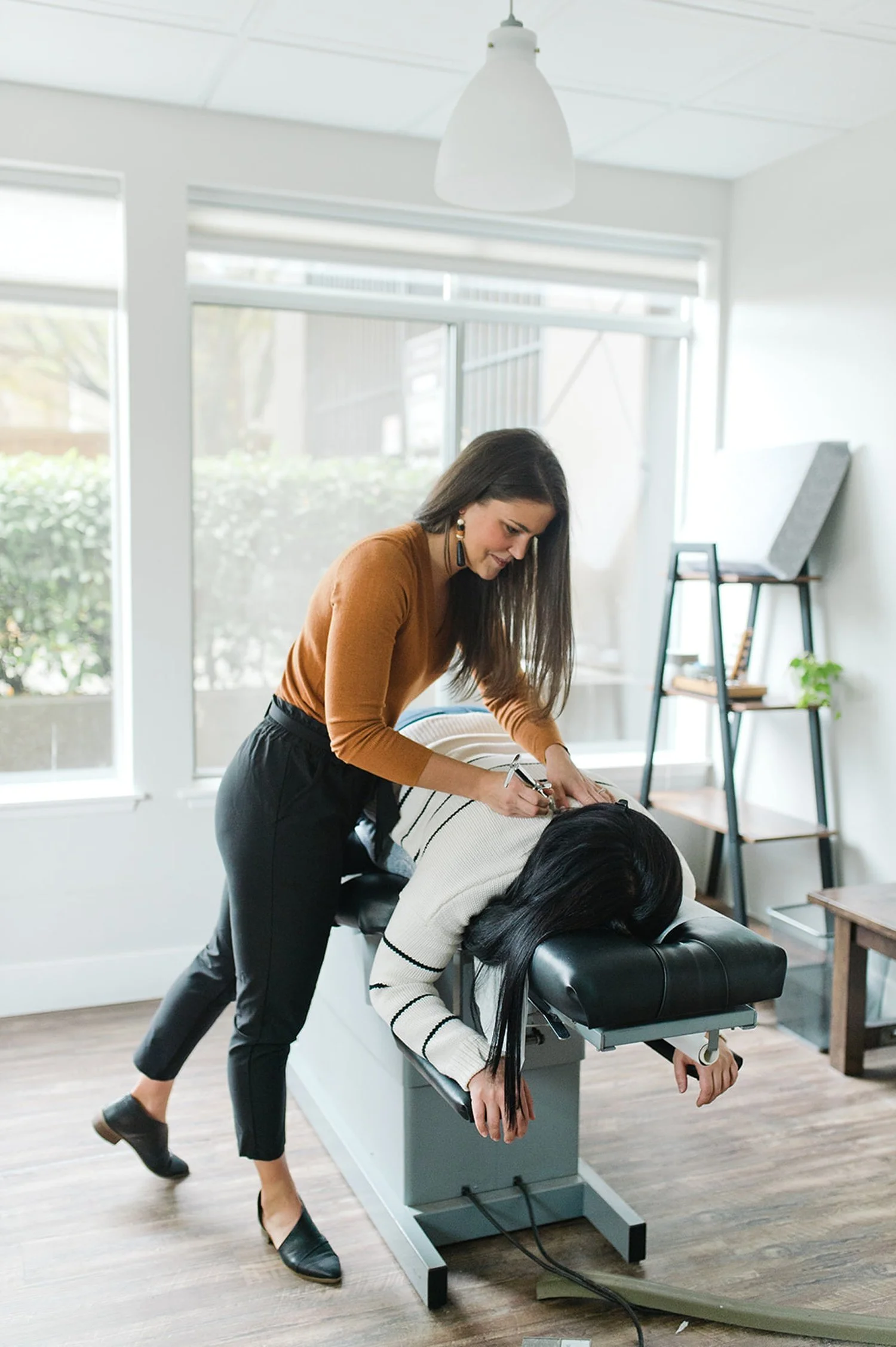
2. What's actually happening in my body during the third trimester that makes everything hurt?
This is the one where I always feel SO validated. Like, oh, there's an actual reason my hips feel like they belong to a different person? Good to know.
Shea's take:
Yes! There is absolutely a reason your body starts to feel like it belongs to someone else in the third trimester.
At this stage, your body is doing something incredibly intelligent: creating more space and mobility in the pelvis to prepare for birth. Hormones like relaxin soften your ligaments and joints, especially through the pelvis. That's essential for birth, but it can also create a sense of instability, which is where a lot of the hip pain, pelvic pressure, and low back discomfort comes from.
Your center of gravity is also shifting forward as baby grows, which means your body is constantly reorganizing. That can create more tension through the low back, hips, and rib cage as everything adapts.
Underneath all of this, it really starts with how your brain and nervous system are communicating with the rest of your body. When that communication is clear and your body is adaptable, it can respond to these changes with more ease. When there's already stress or stored tension in the system, that adaptation tends to come with more compensation and strain.
None of this means something is wrong. It's actually a reflection of how much your body is doing to prepare. Chiropractic care helps reduce those patterns of tension so your body can process these changes more efficiently and you can move through the third trimester feeling more supported.
3. What are your top tips for staying comfortable in the third trimester?
OK, this is the one you came here for. Give us the goods, Shea!
Shea's take:
This is where we get to support the body in really simple, tangible ways.
Stay consistent with chiropractic care. This is one of the biggest game changers in the third trimester. As your body is constantly adapting to baby's growth and positioning, regular adjustments help reduce tension, support pelvic balance, and keep everything communicating well. Instead of waiting until something hurts, this is about helping your body stay ahead of the stress so it can adapt with more ease.
Prioritize how you're sleeping. Side-lying is key, but how you support your body matters. I love a pillow between the knees and another under the belly so the pelvis can stay more neutral. Think supported, not collapsed. The more your body feels held at night, the less it has to compensate during the day.
Keep gentle, intentional movement in your day. Your body is meant to move, even in the third trimester. Short walks, pelvic tilts, or simply getting out of one position more often can make a big difference. It's less about doing more and more about keeping things flowing so the body doesn't get stuck in one pattern.
Get out of positions that create compression. Deep, sinky couches or slouched sitting can increase pressure through the low back and pelvis. Try sitting more upright or supported when you can. Small shifts in posture throughout the day can significantly reduce strain.
Support your nervous system daily. This can be as simple as slowing your breath, getting outside, or taking a few minutes to actually rest without stimulation. When your body feels safer and more regulated, it can soften and adapt more easily, which directly impacts how you feel physically.
I love this list because none of it is about being "perfect." It's about small, doable shifts that actually make a difference. The pillow-between-the-knees tip was a lifesaver for me during both pregnancies!
4. What is the Webster Technique, and how does it help during pregnancy?
I mentioned this above, but I know a lot of people have heard the term and aren't totally sure what it means. Shea's explanation is way better than mine!
Shea's take:
The Webster Technique is a specific chiropractic analysis and adjustment that focuses on the sacrum (the triangular bone at the base of your spine) and pelvis during pregnancy.
The way I like to explain it is this: your body is creating baby's environment. When the pelvis is moving well and the surrounding muscles and ligaments are balanced, it allows for better movement, less tension, and more ease for both mom and baby.
During pregnancy, it's very common for tension patterns to build, especially around the sacrum and the supporting ligaments. The Webster Technique gently addresses those patterns through a specific adjustment and soft tissue work, helping restore balance in the pelvis.
An adjustment is very gentle and adapted to the pregnant body. Most moms are lying on a pregnancy pillow and everything is specific, comfortable, and supportive.
One really important thing to clarify: the Webster Technique is not about "turning" a baby. That language has been intentionally moved away from. Instead, the goal is to reduce tension and improve pelvic function so baby has the space and freedom to move into the best position on their own.

5. How does chiropractic care help prepare your body for birth?
This was huge for me. I didn't just want to feel better during pregnancy. I wanted to feel like my body was actually READY for what was coming.
Shea's take:
I love this perspective, because preparing for birth isn't just about getting through pregnancy. It's about how your body functions when the moment comes.
As birth approaches, your body needs to coordinate a lot at once. The pelvis needs to move well, the muscles and ligaments need to respond appropriately, and everything needs to work together in real time. When your body is adaptable and not held in patterns of tension or compensation, it creates more space and symmetry for baby to descend and navigate through the birth canal.
Birth isn't just a physical event, either. It's deeply neurological and hormonal. Your brain is directing contractions, coordinating muscle patterns, and guiding the release of key hormones that support labor progression. The quality of that communication between your brain and body matters.
When someone has been under consistent care, I often see that their body is more responsive, less guarded, and better able to shift as labor unfolds. It doesn't mean birth will look a certain way or be "perfect," but there is often more ease, more efficiency, and a greater sense of connection to what their body is doing
The goal isn't to control the process, but to help your body be as prepared, supported, and adaptable as possible going into it.
6. What about postpartum? When should new moms come back in?
Because the journey doesn't end at delivery, friends. Your body just did an incredible thing and it deserves support on the other side, too.
Shea's take:
I typically recommend moms come in as soon as they feel ready, which can be within the first few days to weeks postpartum. There's no need to wait until something feels wrong. This is actually one of the most important windows to support the body as it recalibrates.
After birth, your body is shifting again. Hormones are changing, tissues are healing, and you're adapting to new physical demands like feeding, holding, and less consistent sleep. All of that can create new patterns of tension, especially in the neck, shoulders, low back, and pelvis.
Here's something that might surprise you: this isn't just about mom. Babies aren't born with a fully developed ability to regulate their own nervous systems. They rely heavily on co-regulation, meaning they are constantly attuning to the state of the parent. When a parent feels more supported and regulated in their own body, it directly influences how baby feeds, sleeps, and settles.
And yes, I absolutely see babies too! Even in the most beautiful births, there can be stress through baby's head, neck, and body. Gentle, specific care can help support their ability to feed, sleep, and regulate more easily. I really see postpartum care as care for both mom and baby. When both are supported, the entire dynamic can feel more connected and calm, which is such a gift in those early weeks.
Find Your Village
If there's one thing I've learned through pregnancy, postpartum, and now raising two kids, it's that you are not meant to do this alone. Building a care team you trust, finding community, and having people in your corner makes all the difference.
That's one of the reasons both Shea and I are part of We Are Your Village, (more on this soon!!!) If you're looking for more trusted resources and providers who genuinely care about supporting you through this season, check them out.

Rooted Resources of We Are Your Village
Let's Document This Chapter
Speaking of your third trimester... if you're in it right now (or approaching it soon!), this is one of the most beautiful times to capture in photos. I know, I know, you might not feel like it. But trust me on this one: you will look back at these images and be absolutely in awe of what your body did.
I specialize in maternity photography that feels relaxed, joyful, and real. No stiff posing, no trying to look perfect. Just you, your bump, and this incredible moment. I'd love to chat about capturing it for you.
[Design note: 2-3 maternity session images here, ideally showing diverse body types and a mix of indoor/outdoor Seattle locations]

Shea of Tree of Life Chiropractic has offices in Seattle and Kirkland and specializes in prenatal, postnatal, and pediatric chiropractic care. All of their doctors are Webster Technique certified. You can follow them on Instagram at @treeoflifeseattle and book an appointment on their website.
Have questions about building your own prenatal care team? Check out my full breakdown of my pregnancy care team and my favorite pregnancy resources for more recommendations.